 Skip to content

Raw vs. Cooked Food: The Longstanding Debate


It’s summer time and this is the time where there is an increased intake of fresh fruits and salads. So here comes the ever debated topic of raw foods versus cooked foods. How do you know which is best for you especially when you are craving for more raw foods in your diet during the hot summer months?
Let’s explore:
Smoothies, salads, fresh juices, and grain bowls—raw foods are everywhere. They’re convenient, refreshing, and nutrient-rich, which makes them incredibly appealing. Especially in the wellness world, raw food is often seen as the pinnacle of a “clean” diet. But Ayurveda reminds us that health isn’t just about nutrient content—it’s about digestion and assimilation. Simply put: You are not what you eat—you are what you digest.
Even the most nutrient-dense food is of little use if your body can’t break it down and absorb it. And here’s a key insight from Ayurveda: If your food isn’t cooked on the stove, your stomach will have to cook it for you. That process requires a strong, balanced digestive fire—Agni—something many people today are lacking due to modern diets, stress, and lifestyle habits.
Not All Raw Foods Are Created Equal
Raw foods tend to be cold, dry, light, and rough—qualities that increase Vata dosha. In small amounts and under the right conditions, they can be refreshing and beneficial. But a diet dominated by raw foods can often lead to symptoms like:
Gas, bloating, and constipation
Insomnia or disturbed sleep
Cold extremities and dry skin
Low libido and vitality
Decreased appetite
Feeling ungrounded and increased anxiety
While Pitta (fire element) constitutions often tolerate raw foods better due to their naturally strong digestion, Vata and Kapha types are more prone to imbalances. This becomes especially problematic in colder seasons or climates, where the body already works harder to stay warm and grounded.
Many commonly eaten raw foods—such as cabbage, kale, broccoli, lentils, beans, and raw grain salads—contain compounds like oxalates, lectins, and goitrogens, which are difficult to digest and may hinder nutrient absorption. Cooking helps neutralize many of these anti-nutrients, making the food easier to digest and more nourishing overall.
The Role of Agni (Digestive Fire)
From an Ayurvedic lens, health is not just about food—it’s about digestion. Agni governs how we break down, assimilate, and transform food into tissue. Weak or imbalanced Agni results in undigested food residue (ama), which can accumulate and eventually lead to inflammation, toxicity (ama-visha), and chronic disease.
Cooking food helps pre-digest it, breaking down fiber and softening nutrients so they’re easier to
absorb. Light cooking—like steaming, simmering, or sautéing—can enhance the bioavailability of nutrients like lycopene and beta-carotene. While it’s true that high heat can destroy some vitamins and enzymes, many of those enzymes would be broken down by our own stomach acid anyways and don’t contribute meaningfully to digestion.
Raw Foods in Balance

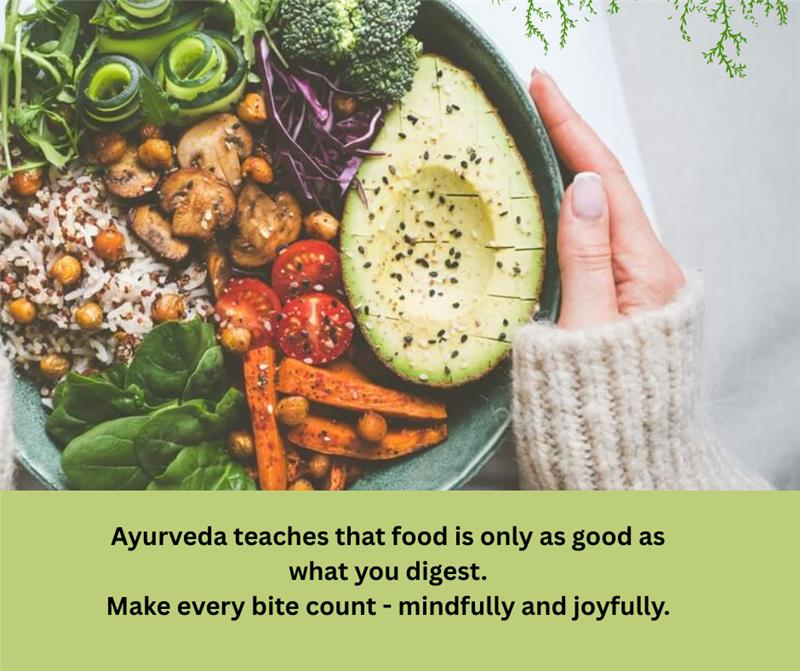
There is a place for raw food in a well-balanced Ayurvedic diet. Raw fruits and soft vegetables like cucumber, celery, lettuce, and leafy greens can be cooling and hydrating—especially in hot weather, for Pittas, or after periods of heavy eating. Juices, chutneys, and fresh seasonal fruits (eaten alone and properly combined) can be refreshing and beneficial. In these cases, moderation is key.
However, raw foods should generally be avoided when:
- You feel cold or ungrounded
- You are anxious, depleted, or recovering from illness or childbirth
- You’re traveling or stressed
- It’s winter or the climate is cool and dry
- You’re experiencing weak digestion, bloating, or gas
When incorporating raw foods:
- Always eat them at room temperature
- Use warming spices (pepper, ginger, mustard, lemon juice) to kindle Agni
- Avoid cold drinks and smoothies straight from the fridge
- Blend or juice fibrous vegetables to reduce digestive burden
- Combine raw foods with a warm, cooked component to balance the qualities
Personalization Is the Path
Whether raw or cooked, the most important Ayurvedic principle is that food must suit you. Your dosha, digestive strength, age, lifestyle, and season should all guide your food choices. A raw diet may bring short-term vitality, especially when transitioning from processed or heavy foods—but if sustained for too long or used indiscriminately, it can lead to Vata aggravation, tissue depletion, and imbalance. As one saying goes: “Anything can be medicine, and anything can be poison—it all depends on the context.”Want to Know What Really Works for Your Body?
Raw or cooked? It depends on you. If you’re feeling confused about food, dealing with bloating, low energy, or just want to feel better in your body, let’s chat. Ayurveda isn’t one-size-fits-all – it’s personal, and it should feel that way.
Grab a free 15-minute call so we can check in, talk about what’s going on with your health & see how I can support you. If the calendar’s full, no worries -check back next month. If it feels urgent, just send a quick email to amita@kreemshakti.com, and I’ll do my best to make space!
#Ayurveda #DigestiveHealth #RawVsCooked #HealthyEating #AyurvedicTips #NutritionBalance #VataPittaKapha #HolisticWellness
✽ ✽ ✽
Amita Basra
Ayurvedic Practitioner | Kreem Shakti
I do this work because true healing happens when we listen to the body, honor its rhythms, and live in alignment with our inner nature. Through Ayurveda, I help others move out of imbalance and into clarity, strength, and vitality—physically, emotionally, and energetically.
For 6 years, I have had the honor of serving the Bay Area, supporting individuals on their journey toward sustainable wellness and self-trust.
